Traditional Paranung Drum of the Cham People
Thứ Hai, 02/12/2024
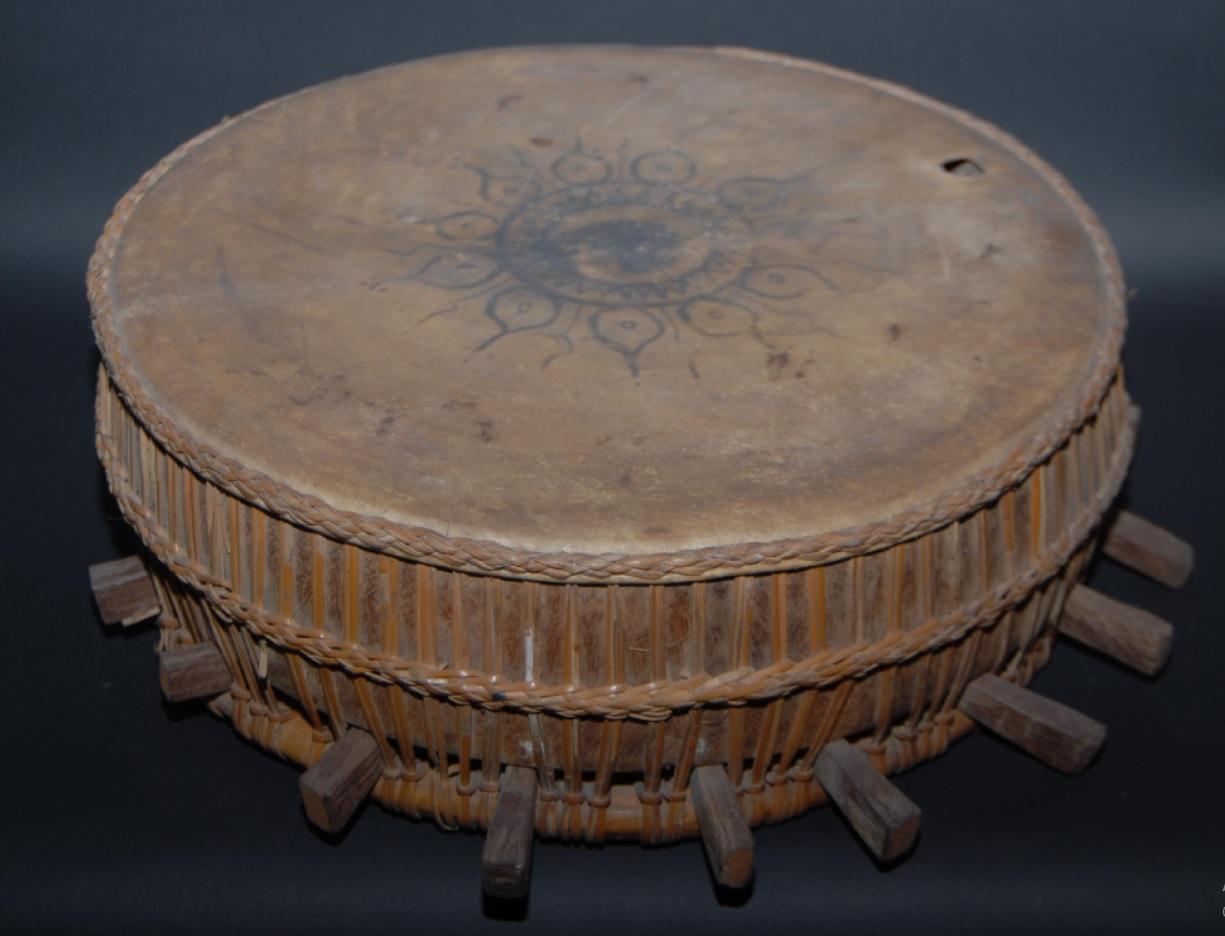
The Cham Balamon and Cham Bani communities are mainly concentrated in Ninh Thuan and Binh Thuan provinces. They possess a long-standing and diverse cultural heritage, in which traditional music represents a distinctive cultural legacy reflecting the Cham people’s spirit, character, and spiritual world. The principal musical ensemble indispensable in rituals and festivals includes the Saranai oboe, the Paranung drum, and the Ghi-nang drums. Each instrument is symbolically associated with parts of the human body: the Saranai represents the head, the Paranung drum represents the body (internal organs), and the pair of Ghi-nang drums represents the legs.
The Paranung drum is a membranophone percussion instrument of the single-headed drum type. It has a cylindrical shape with a low body, approximately 15 cm in height, carved from a single block of hardwood such as ironwood, coc wood, or ca chit wood. One side of the drum is covered with deer, goat, or young buffalo hide. Two circular rattan hoops, together with a system of cords and wooden wedges, are used to tighten the drumhead and adjust the sound. The drum produces three main tones: tac/tac, tam/tin, and tam/tin. When performing, the player holds the Paranung drum in front of the chest, resting the rim against the thigh; the left hand both holds and strikes the rim while the right hand strikes the drumhead to create sound. For this reason, the Paranung player is often referred to as the “master of clapping.”
In the past, the Paranung drum was used only in rituals such as the Rija Nagar ceremony, the Kate festival, funerals, Kut initiation rituals, and wedding ceremonies. Therefore, before using the drum, the Cham people performed a ritual to seek permission. Today, the Paranung drum is also used on stage for ensemble performances and as accompaniment for traditional songs and dances. This practice helps introduce and promote Cham folk music while contributing to the preservation of its distinctive cultural values.
This Paranung drum was crafted around 1940 by Mr. Bao Thung Mu from Van Lam village, Phuoc Nam commune, Thuan Nam district, Ninh Thuan province. It was collected by the Vietnam Museum of Ethnology in 1996 and is currently displayed in the exhibition area on the Cham people on the second floor of the Dong Son Drum building.
Author: Vu Thi Thanh Tam
Photo: BTDTHVN