Traditional Women’s Skirt of the Gie-Trieng People
Thứ Sáu, 28/02/2025
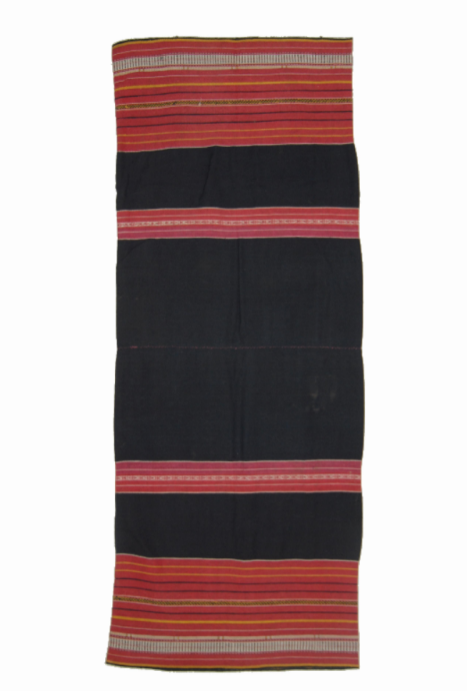
|
The Gie-Trieng people mainly reside in Kon Tum and Quang Nam provinces. In Quang Nam, they include the Triêng, Ve, and Bnoong groups. Triêng women in Quang Nam have long cultivated cotton, woven cloth, dyed fabric with indigo, and made their own traditional costumes, including skirts, shirts, leggings, and cloaks.
The tubular skirt (cle tapang) worn by Triêng women measures approximately 1.4 meters in length and 50 centimeters in width. It is sewn from two pieces of indigo-dyed fabric, each about 70–75 centimeters wide. During weaving, patterns are arranged along the width of the fabric; after being sewn together along the length, the decorative patterns appear horizontally across the skirt. These consist of colored bands in which red is the dominant color, interwoven with white, yellow, and black stripes. Among the Triêng people, garments with more red color traditionally indicate higher social status and prosperity.
|
When worn, Triêng women wrap the skirt high under the arms, covering the chest. During festivals and ceremonial occasions, they wear an additional cloak covering the shoulders. In the past, on hot days, Triêng women sometimes left the upper body uncovered and folded the skirt around the waist, tucking the excess fabric at one side of the hip. Today, they commonly wear blouses with skirts or modern clothing similar to that of the Kinh people for convenience in daily activities and labor. This type of tubular skirt is now mainly worn during festivals, Lunar New Year celebrations, weddings, and community events.
This skirt was woven by its owner in 1983 and preserved as a valuable family possession until it was sold to the Vietnam Museum of Ethnology in 1994. The skirt is currently preserved in the museum’s storage collection.
Author: Vu Phuong Nga
Photo: BTDTHVN